
 |
 |
 |
 |
 |
 |
 |
 |
 |
| Back to front page |
 |
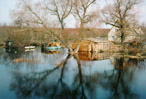
Inland water There are many natural water bodies, such as rivers, lakes and bogs in Estonia due to the varied relief and the moderately damp climate, with the amount of precipitation (550-700 mm) essentially surpassing the evaporation.
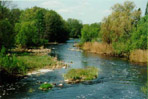
*Data of Estonian rivers (length, gradient, quantity of current and discharge) There are only 10 rivers longer than 100 km. The biggest and most abundant of water is the boundaring Narva River, which gets its water from Lake Peipus and flows into the Finnish Bay. The Emajõgi River, linking Lake Peipus and Lake Võrtsjärv is the only river that is navigable in its whole length. The biggest river of Central Estonia is the Pärnu River. The Pirita River is especially important for the city of Tallinn, since the river’s water is channeled into Lake Ülemiste, where the city gets its basic water. The Ahja and Võhandu rivers are the best-known rivers of Southeast Estonia, famous for their steep valleys with Devon sandstone denudations.
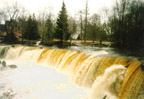
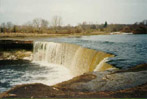
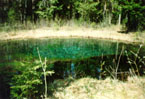
Flowing down the limestone shore, the biggest North-Estonian rivers form waterfalls. Most of the waterfalls are 1-4 meters high. The Jägala waterfall is 8.3 m high, and the Keila waterfall is 5.6 m high. LAKES There are about 1200 natural lakes in Estonia (with the area over 1 ha). Lake Peipus and Lake Võrtsjärv are considered as big lakes, the rest of the lakes are small lakes. In general the lakes are shallow; just a couple of dozens are over 20 meters deep. *Table: The area and depth of Estonian lakeMost of the lake basins were formed during the melting of the continental ice sheet, therefore the areas most rich in lakes are situated in areas of varied relief, such as in South-Estonian uplands and in Vooremaa. There are many coastal lakes in West-Estonian coastal areas, formed in place of former sea bays as a result of the land uplift. In bogs there are a lot of bog lakes and pools.
Links: |

| ||
|
Last updated: 18.03.2000 Copyright © Institute of Geography Webmaster |
|