|
Örjan Sjöberg, Tiit Tammaru Abstract Not only are individual economies in Central and Eastern Europe moving through a transitory phase, so too is the production of statistics. This creates new sources of distortion and migration data is no exception in this regard. Utilising returns from a survey carried out in Estonia in 1997, this paper illustrates some of the shortcomings. Such statistics as exist indicate that the process of counter-urbanisation, first observed during the early 1980s, has continued well into the 1990s. The survey returns, on the other hand, lead us to conclude that a good part of all migratory moves go unrecorded and that these unrecorded moves are predominantly to major urban centres. Furthermore, the incidence of non-registration is systematic in the sense that it increases over time and is strongly related to the age of the migrant. INTRODUCTION One of the many areas where the demise of central planning and one-party rule in the formerly socialist polities in Central and Eastern Europe is expected to make a difference is migration and urban growth. While the notion that central planners were able to control population flows may at least in part have been a "myth of managed migration" (Buckley, 1995), most observers have argued that centrally planned economies in fact displayed some features that were common across countries and were systemic in origin (for recent surveys see Enyedi, 1990, 1992, 1996; Korcelli, 1990; Musil 1993; Szelényi 1996). At its most minimalist, this amounts to no more than the claim that urban growth under socialism lagged behind that of the industrialised market economies; others maintain that there are indeed traits systemic in nature that are not merely typical, but in fact unique or singular to the socialist experience of migration and urbanisation. With central planning a thing of the past, migration patterns of a rather different character and extent are likely to result as these economies move towards the market (Cole and Filatotchev, 1992, pp. 445-450; Szelényi, 1996, p. 288). It is logical to expect that economic rationalism will be allowed to play an increasingly important role in moulding migratory behaviour. Similarly, as allocative efficiency improves, the structure of the economy itself can be expected to change. Industrial restructuring, changes in housing markets (in some cases the very existence of such markets) and the abolition of such administrative controls as may have existed are likely to produce a rather different set of opportunities and constraints faced by the prospective migrant. This in turn points in the direction of a profound change with respect to migratory behaviour and urbanisation trends. The question is, what do these changes amount to and what do they imply? Whatever the case might have been under central planning, it is often taken for granted that, in the end, we can apply the standard models and theories that have been developed with the industrialised market economies in mind equally well to formerly socialist polities. As Mitchneck and Plane (1995b, p. 286) have noted, however, it would be jumping to conclusions to assume that this process of change is a straightforward one. After all, the period of transition may yield a varied crop of outcomes, only some of which may conform to the notion of linear progress towards a market economy. Therefore, although it is still too soon to assess the final outcome of the transition, it is worthwhile studying the process whereby a country moves from a migratory regime associated with central planning to the type one could expect to find in an industrialised market economy. Trouble is, however, that we often lack the statistical wherewithal to conduct the required kind of analysis. This observation of course has little that is novel about it. Thus, Anderson et al. (1994) in their discussion of population statistics in the Soviet successor states identify a number of problems left over from the Soviet era, and note the need to restructure the collection and processing of data. This is not least true if we are to shed some light on the process of transition itself. They point to the need to establish baselines, to collect new or more detailed data and, significantly, the imperative to establish new systems of population registration to accomplish these tasks. Already here a major problem arises, however, as any move to set up such a new system — even when not made slower for the fact that agreement on how to do it may be hard to achieve — implies a loss of valuable time. By the same token, pre-existing (i.e., Soviet era) sets of data may not be fully comparable and are often incomplete, thereby reducing their potential contribution to the construction of baselines. With respect to migration data, for instance, certain categories of moves are likely to have been under-reported and it is clear that existing rules and regulations on how to report those moves that were in fact registered were not always adhered to (e.g., Anderson and Silver, 1985). To this dismal list we would like to add yet another flaw which has not been granted the attention it deserves. This is the likelihood that precisely because behaviour may change, and change in a selective fashion, statistics as exist fail to account for the processes they purportedly capture. This is not least true of migration data. If and when the system of residence permits, the ubiquitous propiska, is done away with, the distortions in reporting that it brought about are likely to disappear as well. From this observation we must not, however, jump to the conclusion that data collected after this point in time better reflect reality. To illustrate our point, we here report the results of a study of migration patterns in one of the successor states, Estonia. We do so with a view of identifying the consequences of a change in reporting regulations and practices. To this end a survey of individual migration histories was conducted in 1997. This exercise, to the extent that it yielded a more reliable set of data than that which official statistics afford, indicates that post-Soviet migration data is little better than its Soviet era predecessor: different but still deficient. The contrasts between our survey returns and officially reported statistics are outlined, as are the sources of divergence. As our findings indicate that something very different from that suggested by the analyses of the Statistical Office of Estonia (ESO) is indeed taking place, in the end our work may provide some inputs for a more thorough understanding of how migratory flows and urbanisation processes are transformed during the transition period itself. WHAT OFFICIAL STATISTICS TELL US Official statistics on migration indicate that the population of independent Estonia has a low propensity to move and that urban areas have suffered a loss to rural areas through out-migration (see Table 1). As the natural increase of the urban population had also turned negative by 1991, and no net addition from administrative changes has taken place in Estonia since the dissolution of the Soviet Union, it goes without saying that urban areas are declining in absolute terms. This in turn suggests that counter-urbanisation, first noted in 1983-85, has continued throughout the period of transition. Furthermore, it would appear, domestic migratory flows irrespective of direction are dwarfed by net out-migration from Estonia itself, reflecting members of the Russian minority moving out of the country (Marksoo, 1996). This is in stark contrast to the heavy inflow of immigrants from other parts of the former Soviet Union and the rapid process of urbanisation which characterised Estonia during a considerable part of the post-war period (Marksoo, 1995). Table 1. Migration flows in Estonia 1989-96.
Source: Estonian Statistical Office. Although the statistics reported in Table 1 may seem straightforward enough, a number of problems immediately make themselves felt. To begin with, the ESO applies a rather strict definition as to what is considered a properly registered move. While the exact wording may differ between publications, official statistics are usually confined to recording changes in places of residence involving a move across the administrative borders of local governments. Since 1990, the actual time of out-migration is considered to be that of registration at the new place of permanent residence. Today, the ESO collects data from local governments; until the end of 1993, this was the task of specially designated passport offices. Local governments forward information on all registered moves to address bureaux, but the statistics are based on in-registration data only. However, the latter are processed and analysed provided that they are considered complete, that is, that the migrant has taken care not only to register at the new place of residence but has also de-registered with the local authorities at his or her former place of residence. Such a system may have worked reasonably well during the Soviet period. In contrast to the practices maintained in what was then the Soviet Union, registration procedures in Estonia today are based on the voluntary cooperation of migrants. In fact, sanctions are no longer meted out for non-compliance, the incentives to register seem weak and, considering the need to generate reliable statistics, administrative rules and regulations at times come across as counter-productive. As there is no longer any legislation to the effect that registration is mandatory, many migrants appear to shun the entire exercise, or only complete it in part. Being well aware of this state of affairs, the national statistical authorities take care to inform readers of their publications that demographic statistics refer to "registered population". Indeed, the ESO not only advises users of official migration statistics that this is the case, but they also offer information about the probable causes part (Eesti rahvastik, 1996, p. 13). By way of an example, many young people who leave their parents' home in search of work or to take up college or university studies fail to register their change of residence. Unlike during the Soviet period, when any change of residence for the purposes of study was noted in the domestic passport, such a migratory move may now go undetected without the migrant specifically trying to circumvent the system. As a result, official data indicate that the 1992 and 1993 balances of internal migration in Tallinn and Tartu were negative while in fact the reverse may well have been true. Although such caveats and explanations provided by the ESO are informative and helpful, this does little to change the perception that the picture projected by official statistics comes across as contradictory. On the one hand, the state of affairs as indicated by Table 1 — that is, net urban out-migration — conforms to patterns reported elsewhere among economies in transition, for instance in neighbouring Latvia (Markausa, 1997), Lithuania (Buracas, 1997, p. 99) and in Russia (e.g., Mitchneck and Plane, 1995a, pp. 26-27; Wegren, 1995, pp. 880-885). The existence of various constraints, notably rigidities in the housing market and the lack of new employment openings, probably go some way towards explaining why such a pattern might materialise, but on the other hand chances are that new opportunities that arise are disproportionally associated with the major urban centres (Musil, 1993, pp. 903-904). In fact, as official restrictions on movements (such as the existence of closed city policies) no longer apply and the reforms result in a thorough restructuring of the economy that is likely to favour cities and major towns, it would perhaps be more natural to expect urban areas to be net recipients of migratory flows. Furthermore, by focusing on aggregate data alone, much interesting and informative detail is lost. For instance, with respect to emigration, closer inspection reveals that much of it took place in the early phases of post-Soviet independence: the out-flow of Russian residents started to decline after reaching a peak in 1992 (Marksoo, 1996). Indeed, the existence of a large minority group, which perhaps behaves rather differently with respect to migration as compared to the majority population, should make for a cautious approach to the problem at hand. Perhaps less obviously, but no less significantly, the data made available by the ESO suggest that age might have something to do with it. Figure 1 reproduces the age schedule of migration resulting from official data. As can be seen, although the form of the schedule by and large conforms to what we would expect, the difference registered for the various age groups is less pronounced than could be foreseen as likely. And over the period 1989-1997 the difference is becoming less and less apparent. As it happens, research on age and migration (e.g., Pandit 1997) indicates that this is what might be expected under conditions of depressed economic conditions. Higher rates of unemployment (Milne, 1992) — or, as the case might be, larger generation size, implying more competition for jobs (e.g, Berger 1989; Rogerson 1987) — results in lower rates of migration, all else being equal. Yet in the case of Estonia this is too facile an explanation. Firstly, the number of 20-24 year olds that move appears to decline as the economy recovers from the initial transitional shock, not the reverse. True, unemployment has increased over the period in question, but on the other hand all other macro-economic indicators have developed favourably — and unemployment is largely a problem for the middle aged rather than young adults ([UNDP Human development report?]). Secondly, data as exist suggest that the number of members of the relevant cohorts is not particularly large; on the contrary, the number of new entrants into the labour force is at historically low levels. Rather, we would surmise, chances are that the statistics themselves are less than fully reliable. Although based on registers, population data are no better and no worse than the extent to which they are reasonably complete. And complete they are not. On the one hand, young people can leave their parents house in search of work, to study or simply move to a place of their own without leaving much trace in the statistical records. On the other, the existence of incentives to register fictitious moves has been noted. For instance, Marksoo (forthcoming) suggests that under-reporting the number of residents at a given address may serve to reduce utilities bills. The ESO similarly notes that high municipal taxes in urban areas may also encourage the registration of fictitious moves from urban to rural areas (Eesti rahvastik, 1996, p. 13). If this is indeed the case, chances are that the accuracy of official data suffers accordingly. Against this background then, it is clear that an assessment of the quality of official statistics is crucial to any effort to analyse migration and urbanisation during the current period of transition.
AN ALTERNATIVE SET OF DATA Our evaluation of the quality of official migration statistics will be done by utilising an independent set of statistics generated by a sample survey designed to capture the post-socialist migratory history of a representative sample of working age residents of Estonia. A total of 1001 respondents aged 15 to 74 were asked, as part of the Baltic Omnibus Survey organised by the Estonian Market and Opinion Research (EMOR) company, to provide information on all moves made between January 1989 and January 1997. Each respondent was also asked to give the reason in each case for moving and whether they in fact were registered in their current place of residence. The data set is here utilised with a view to identifying both the extent to which migration takes place and the predominant direction of those moves. The survey also enables us to assess the socio-demographic characteristics of migrants and non-migrants in the sample. To generate the sample, a stratified random sampling techinque was used, ensuring that the data generated is representative with respect to urban-rural differentials and to the various levels of the urban settlement system of Estonia (Figure 2). Thus, in addition to rural areas, it is possible to distinguish four hierarchically layered types of urban settlements, ranging from the top tier (Tallinn) to small urban centres. However, the sample is not representative at the county level or below. Similarly, being retrospective, the data is susceptible to the risk of sample selection bias; neither people who have left the sampled age bracket nor those who have left the sampled population for other reasons (in particular emigration) have been taken into account. Finally, while on the subject of shortcomings, it should be noted that omnibus surveys are not the ideal way of collecting data. The purpose, nature and diversity of questions typically contained in such surveys put limits on the reliability of information collected. With one major exception, the willingness to respond to the various questions was good. Typically, an internal response rate of about 97-99 (if not in fact 100) per cent was achieved. The one exception was the only open-ended question included in our section of the questionnaire, on the specific reasons for not registering as a newcomer (to which 64 per cent of the eligible respondents provided usable answers). Figure 2: Migration by age group in 1989, 1993 and 1996 according to ESO data
MOVERS AND NON-MOVERS Out of the total number of respondents to the questionnaire, 319 (31.9 per cent) had changed their place of residence at least once between January 1989 and the end of January 1997. Most migrants, or 58.5 per cent, only made local moves, that is, finding a new place of residence within the same municipality or rural commune. Over the period 1989-96, the migrants (as opposed to non-migrants) included in our survey moved on average 1.47 times, for a total of 468 recorded moves. Again the majority of these migratory events, or 61.2 per cent, were local in nature. By looking at the socio-demographic characteristics of respondents, we can follow the selectivity of the migration process. Out of the socio-demographic characteristics given, age, civil status, educational attainment, income, type of dwelling and relations between actual and registered places of residence showed statistically significant differences between migrants and non-migrants (Table 2). Conversely, gender, size of household and ethnicity were not important correlates to the decision about whether to migrate or not. It should be added at this point, though, that on a less aggregated level both household size and ethnicity play a much more significant role. We shall return to this issue later on. Age is a universal determinant of migration, and Estonia is no exception in this regard. The intensity of migration is high in younger age groups (i.e., up to the mid-thirties) and increases again at the age of retirement. Distinguishing between two sub-groups, local and non-local migrants, age is an even more crucial correlate of the decision to migrate. Young people contribute the most to non-local moves. In the age groups 20-34, non-local movers outnumber local ones by a factor of approximately 2. In all other age groups the situation is the reverse. Also, moves related to retirement are mainly local in nature. Turning to the civil status variable, we can note that the proportion of single member households among migrants is not significantly higher than among non-migrants. This suggests that the propensity of single member households to move is no more pronounced than it is for other groups. While this may at first seem unexpected, it can be explained by the demographic structure of the population. As we have already seen, old age correlates to a low or average propensity to move. In Estonia there is an extremely big gap, almost twelve years, between the life expectancy of men and women (Katus, 1995), with the predictable result that the proportion of old, single (including widowed) women in society is very high. Thus, the almost equal share of singles among migrants and non-migrants may not be so surprising after all. On the other hand, cohabitation is becoming increasingly important in Estonia and as we can see from Table 2, respondents in this category are over-represented among migrants. Similarly, although the size of the household does not produce any noticeable differences with respect to the migration process. As reckoned by age groups, we find that among migrants belonging to one and two person households, young individuals predominate; among non-migrants old people are more frequently found. Educational attainment appears to influence migratory processes as well, but it should be noted that this may still to a certain extent be a side effect of the age structure of the population. Among less well-educated people, and the level of educational attainment is below average among older generations, the share of migrants is also lower. The group where the education variable plays the most important role is among those with vocational secondary level education or training. In fact, this category makes up a full third of all migrants in our sample, being more significant still (36.4%) among those who have made non-local moves. The education variable also comes across as crucial as we distinguish between local and non-local movers. As compared to the sample-wide average, individuals in groups with low levels of educational attainment tend to move locally. Among people with secondary education, there is no difference with respect to local vs. non-local moves; this category conforms to the average. Respondents with vocational secondary and tertiary education, irrespective of whether complete or not, show an above average propensity to move beyond the local area.
Table 2. Socio-demographic profile of migrants and non-migrants (percentages).
statistically significant difference between the two groups at the 1% level (p<0,01) Income sets a limit to migration as well: the lower the income per household member, the smaller the share of migrants. A monthly average income per household member above a threshold of EEK 1500 noticeably affects migratory behaviour. Those that earn less tend to move less frequently and then mostly locally, whereas those that earn above this level more often move longer distances and are more likely to move in the first place. Costs of migration are high, especially over longer distances, giving people with higher incomes an edge in this respect. Furthermore, the higher the income, the more easily available are long-term housing loans, thereby effectively reducing the impact of this structural constraint on the decision to move. One interesting aspect of the differences between migrants and non-migrants is revealed by comparing the type of dwellings these two categories live in. Among migrants, the share of people living in large blocks of flats (i.e., those with more than eight apartments) is significantly higher than among non-migrants. This presumably reflects a process of concentration currently going on; as such it is quite contrary to the de-urbanisation (or counter-urbanisation) processes of the 1980s as described above. On the face of it at least, in the terminology suggested by van den Berg et al. (1982), Estonia would thus seem to have entered the reurbanisation stage. Obviously, given the purpose of the present exercise, this warrants closer inspection and we will return to this particular issue below.
REGISTERED AND NON-REGISTERED MIGRATION In order to evaluate the quality and reliability of official statistics, one of the most important aims of this study has been to analyse the correlation between actual and registered place of residence. From Table 3 we can see that the discrepancy between actual and registered places of residence is almost entirely a result of the willingness of migrants to register their changes of residence. Especially prone not to register are non-local movers, 62 per cent of whom have not bothered to do so; incidentally this is the group which is in fact covered by official statistics, as local movements (even if permanent) are not recorded. All in all, only 65 per cent of actual migratory events over the period 1989-96 as documented by our survey have been officially registered. Thus, official statistics only cover about two-thirds of the total number of actual moves. Assessing the change of register data over time, we discover that especially since 1995, registration of permanent moves has decreased considerably: in 1995, 1996 and early 1997, only half of all moves were registered. This leads us to the following observations: first, as the discrepancy between actual and registered place of residence depends almost entirely on the migrants themselves, its causes are mainly the result of a system that does not make registration of one's true place of residence compulsory. Secondly, this conclusion goes against what could be reasonably be expected, as on a priori grounds one could surmise that there are sound economic reasons for fictive out-migration (Eesti rahvastik, 1996, p. 13). As Marksoo (forthcoming) has suggested this is especially the case with residents in centrally heated blocks of flats, who can thereby reduce their utilities bill by registering fewer residents in a given apartment. However, among non-movers the correlation between actual and registered place of residence is almost hundred per cent, so this particular explanation carries relatively little weight. Besides, this system of apportioning costs (i.e., one based on the number of people who live in an apartment) is quickly yielding to assessments based on actual consumption. Next, it is worthwhile taking a closer look at the socio-demographic profiles of the people who do live where they are registered and those that do not. The information contained in this table tallies very well with the socio-demographic profiles of migrants and non-migrants in Table 2. As the discrepancy between actual and registered places of residence to all intents and purposes depends on the characteristics of migrants (as opposed to those of non-migrants), for obvious reasons variables that are correlated with migration also tend to correlate with non-registration. Still, there are some differences that deserve to be noted. Firstly, although there were no differences in migration rates between male and female respondents, there are some important gender differences when it comes to registration or non-registration: among men the incidence of under-registration is somewhat higher than among women. Secondly, the age group 20-29 is the most mobile; only three-quarters of the respondents in this group in fact live where they are registered. Although the migration intensity increases again at retirement age, this is not noticeable in the registration statistics, in turn indicating that this group is more willing to register. The biggest difference between Tables 2 and 3 is to do with the variable "civil status." In the case of migrants and non-migrants, age differences cancel out at the aggregate level. This is not the case with registration. Among migrants, younger people predominate, many of whom do not register permanents moves which explains why the proportion of registered people is much lower among those single or belonging to one-person households (where after all, the proportion of young people is high), than among other household sizes. The proportion of non-registered people is high among those who live separately and low among those who have divorced. This can probably be put down to the fact that those who are divorced have made up their minds — the decision is final — and have as a consequence established a new home. Living separately (i.e., without an official divorce), on the other hand, could be thought of as being more temporary in nature and therefore does not necessarily bring about de-registration at the previous place of residence. There are also interesting trends relating to the education variable. Although the relationship between migration and registration is clear enough, it is important to emphasise that among people with higher education the proportion of those properly registered is higher than among the working age population as a whole. This is an important result that is difficult to interpret and therefore would merit further investigation. Income and type of dwelling are also significantly connected to registration: higher income households (i.e., a monthly per capita income above the threshold of EEK 1500) are more mobile and the proportion of registered people is lower among them. As to housing at their destination, migrants tend to favour, advertently or inadvertently, large blocks of flats; in that part of the housing stock we find a lower incidence of registration as well. Table 3. Socio-demographic profile of people who do live and those who do not live in the place where they are registered (percentages).
statistically important difference between the two groups at the 1% level (level p<0,01).
TERRITORIAL SHIFTS From a geographical point of view, important changes have occurred during the current period of transition. Contrary to the data published by official statistics, our survey reveals that migration has contributed to urban growth; six migrants out of ten moved to urban areas (Table 4). Comparing migratory patterns by age further reveals that young people predominate in flows towards urban areas. Also in some other respects existing differences between those that move to town and those that move to rural areas deserve to be noted. Firstly, urbanisation during the transition period is a phenomenon primarily associated with Estonian ethnicity, the majority ethnic group alone accounting for 90 per cent of all urbanward migrants. The circumstance that Estonians are in a sense carrying the contemporary process of urbanisation in part of course reflects differential urbanisation rates among Estonians and non-Estonians. The urbanising drive of the latter, as it were, has long been saturated. Put differently, since immigrants who arrived during the Soviet era were predominantly absorbed by industrial towns already by the beginning of the period under consideration here, the urbanisation rate among members of minority ethnic groups was as high as 90 per cent. Among ethnic Estonians, on the other hand, it was only about 60 per cent (Katus, 1991). As such, it suggests that there is considerable scope for further urbanisation. Secondly, at 32 and 16 per cent, respectively, the proportion of single member households is higher among people who leave for urban areas than is the case among people leaving for rural areas. Table 4. Rural and urban gross in and out-migration flows in Estonia (per cent of non-local moves 1989-96).
In addition to these differences it is important to note that the proportion of people registering their moves differs in other ways as well. Among people who have left for rural areas, the percentage of those complying with existing administrative regulations is high; 84 per cent of those who moved to a rural destination during the period 1989-96 did register. This is in contrast to migrants leaving for urban areas, who appear to have registered their moves much less frequently (58 per cent). An especially low propensity to register — no more than 43 per cent did so — can be found among those heading for Tallinn. This goes some way towards explaining why official statistics give such a distorted picture of the contribution of internal migration to rural population growth. In addition to the above characteristics of post-Soviet rural-urban migration trends, other shifts pertain to the regional distribution of population growth and the settlement system as such. Starting with the latter first, Table 5 reveals a pattern, consistent throughout the hierarchy of urban settlements, of flows of people from lower order centres to higher order ones. Tallinn, the capital city of Estonia, receives a number of in-migrants unmatched by other towns, while the population of rural areas see continuous losses. Equally significant, small urban centres also appear to be losing population through internal migration. Table 5. Population shifts in Estonian settlement system (percentage share of non-local moves 1989-96).
In terms of gross flows, or so the survey returns suggest, Tallinn receives in-migrants from all the lower levels of the settlement system. Indeed, it does so at almost equal rates, the only exception being smaller urban areas that contribute the most towards the growth of the capital. The destinations of out-migrants from Tallinn, on the other hand, tend to be rather evenly distributed across urban size classes and types of settlement. Even when assessed by category of settlement, in no instance does out-migration exceed Tallinn's gains from in-migration. Regional centres, for their part, have grown mainly due to the gains from rural areas and stepwise in-migration from county centres. County seats, in turn, have grown mainly through the inflow from rural areas — the proportion of rural in-migrants in total arrivals is almost fifty per cent. Smaller towns, on the other hand, have lost through internal migration; the lion’s share, or almost half, has been lost to Tallinn, with regional centres and county centres falling far behind as favoured destinations for such migrants. Rural out-migration, for its part, is predominantly (or two-thirds of it) targeting major towns and county seats, these two categories of urban centres thereby eroding Tallinn’s previously unrivalled position as regards migrants from smaller towns. Regional shifts as evidenced by the survey returns are equally consistent (Table 6). Northern Estonia has increased the most on account of internal migration. But this is mainly the result of Tallinn being located there. In fact, most new arrivals in Tallinn originate from counties in northern and western Estonia. The second most significant growth area is Southern Estonia, but as in the case of Northern Estonia, this is due to the impact of second tier cities, the regional centres. Thus, Southern Estonia falls under the influence of Tartu, which is the natural focal point for both the southern and the south-eastern parts of the country. As a result, Southern Estonia is growing apace, largely on account of Tartu’s ability to attract migrants (not least students) not only from its immediate hinterland but also from further afield.
Table 6. Territorial shifts in population redistribution (percentage share of non-local moves 1989-96).
A third growth region is located in the north-east. It comprises the counties of Ida-Viru and Lääne-Viru, both of which are increasing in population size. Of particular interest is the track record of Ida-Virumaa, the only county that is inhabited mainly by members of ethnic minority groups. As it happens, the non-Estonian population is confined to a relatively small number of geographically compact locations; besides Ida-Virumaa, Tallinn contains the other major (and in fact biggest) concentration of non-Estonians in the country. As indicated earlier, in Ida-Viru county the ethnic differentials in migratory behaviour come across very clearly. Ethnicity appears to make a fundamental difference to local and non-local moves. Among ethnic Estonians, local movers only slightly outnumber non-local migrants. As for the Russians, local movers make up a full three-fourths. This is also the case for all non-Estonians taken as a whole. Living in this geographically confined area and excluding all other migration destinations except the capital Tallinn or some other towns in Ida-Viru county itself, these results confirm that the amount of contact non-Estonians have with other regions of Estonia is very limited. On the other hand, ethnic Estonians do not think of Ida-Virumaa as a particularly attractive destination either. Judging from the survey returns, two declining regions can also be added to the above three growth areas. These are the regions of Western and South-eastern Estonia. The most pronounced decline can be found in the former of the two. Although one of the important regional centres, Pärnu, is located here, its growth does not compensate in full for the losses accumulated by virtually all the other parts of the region. Rather, migrants originating here tend to find northern Estonia, and then especially Tallinn, more attractive than the region’s own major urban centres and towns. One final aspect of population redistribution that deserves mention is the incidence and character of return migration, that is, returning to the 1989 place of residence after one or several moves elsewhere. As it turns out, the proportion of return migration in total internal migration flows as recorded by our survey returns is marginal. No more than 2.9 per cent of the sample have returned to their place of residence at the beginning of the period under consideration. Thus it is difficult to make any detailed analysis of this group, it being too small for meaningful analysis. Taken together, the above suggests a very consistent, yet different pattern of population redistribution in Estonia, a pattern that in many respects is the reverse of that projected by official migration statistics. The major urban centres of Estonia, and in particular Tallinn have enjoyed the most favourable position during this period of transition characterised by the shift from central planning to a market economy (and possibly an incipient shift from an industrial to a post-industrial service economy). As a result these major towns are the main beneficiaries of internal migration, or at least the most favoured destinations of those willing or forced to relocate. The lower the rank of a town or locality within the national hierarchy of settlements, the greater the likelihood of recording a net outflow of population. This is especially true in rural areas. In addition, post-1989 flows of internal migration have contributed towards territorial shifts in the distribution of the Estonian population. The major growth regions are to be found in the north, where Tallinn is situated, and the south, where Tartu in particular acts as a magnet.
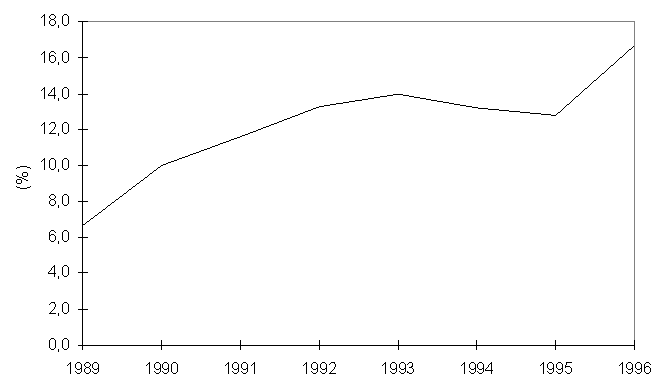
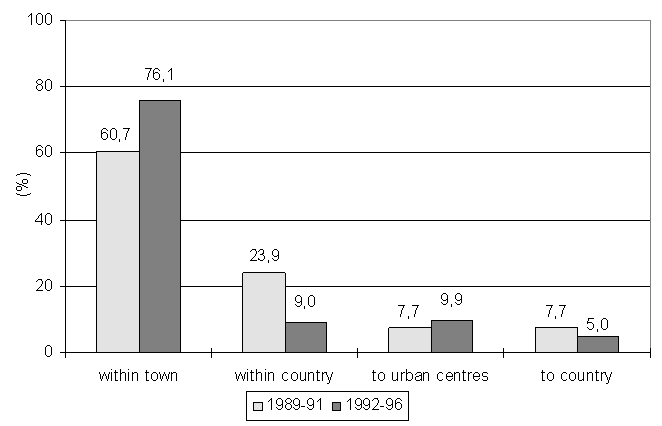
MIGRATION DYNAMICS Official statistics, as made evident by Table 1 above, indicate that there has been a sharp decline in internal migration since 1989 (in fact, the decline had already started in the mid-1980s), to be reversed only after it hit its lowest level in 1994. Our survey returns, as illustrated by Figure 3, tell a different story. They suggest that there was an increase of mobility during the period 1989-92. At that point the migration flows stabilised for the next three years and then started to increase again in 1996. Yet for the period 1989-92 a rather low overall level of migration is recorded by the survey, an outcome to which sample selection bias may conceivably have contributed. Perhaps, then, with respect to the dynamics of migration, official data might be more accurate than our survey returns. If so, the decline in mobility at the beginning of 1990s correlates well with the economically harsh times and the non-existent housing market at that point of the transition. The fact that official statistics indicate an increase in migration intensity during the final years of the period in question, on the other hand, is somewhat surprising in view of the observation that the propensity to register one’s moves appears to have decreased considerably. As our analysis of migration registration suggests, only half of the moves during the period 1995-96 were properly registered. Although it is not unlikely that there are some fictitious registration of moves, with reference to the above and to Table 1 we can conclude however that the intensity of internal migration almost returned to its pre-transition level, or about 60,000 moves annually. According to Marksoo (1995, p. 180), the year 1983 marks an important turning point in Estonian urbanisation; thanks to a reversal of migration flows rural areas started to grow for the first time this century. This is linked to changes in Soviet economic strategy which in turn created a change in the "landscape of priority" (Sjöberg, 1997): in Estonia at that time the emphasis was shifted away from industry to agriculture which proved instrumental in making rural areas much more attractive to live in. In our survey, the year 1992 comes across as another important turning point. Thus, while up to 1992 the trend of the 1980s of leaving rural areas was still in evidence, from that year onwards, urban centres found that internal migration had again made a net contribution to their population numbers. In fact, as urban areas were progressively coming into their own as destinations for Estonians on the move, by the early 1990s urban-rural migration flows tended to counterbalance each other, suggesting a gradual rather than radical change. This conclusion should come as no surprise, given that the state policy of supporting new farmers in the rural areas came to prominence during the initial years of post-Soviet independence and thereby tended to counteract other changes afoot in the Estonian transition economy. In other words, the urbanisation trend that we were discussing earlier is almost entirely related to the second sub-period (starting from 1992) within the period of transition, but its underlying causes appear to have begun to influence developments prior to this date. Even so, it must be borne in mind, as can indeed be seen from Figure 4, intra-urban moves have been the most frequent during both periods and their frequency has increased relative to intra-rural ones. Figure 3. Migration dynamics in 1989-96 (per cent of total moves in the period).
Figure 4. Migratory move by type, 1989-91 and 1992-97 (per cent of total moves in respective period).
Turning now to the related changes affecting the settlement system as such, it becomes clear that urban growth during the post-1992 period is not confined to Tallinn alone or even the other major towns (Tartu, Pärnu, Narva, Kohtla-Järve). As Table 5 indicated, in and out-migration have counterbalanced each other also in the county seats. During the first part of the transition period, county centres lost population through domestic migration, but are now increasingly attracting migrants. In sum, then, if our survey is anything to go by it appears that growth promoting in-migration from domestic sources has, step-by-step filtered down through the various tiers of the urban hierarchy. At the beginning of transition period the population of Tallinn was added to through migration, the capital city subsequently being followed by the major towns and regional centres that make up the second tier. More recently, third level centres, that is, the county seats, have joined the ranks of higher level urban areas. While not strictly within the scope of this paper, this naturally provokes the question: will the smaller towns start growing next? Although it is still too early to tell, the answer may well be "yes" and "no". Depending on such factors as the economic base, location within the region and access to main communication lines the fortunes of individual towns at this level will in all likelihood differ (cf. Musil 1993, p. 904). An indication as to what this might entail can be found if we turn to temporal changes at the regional level. Here, it appears that post-1992 centres located in Northern Estonia, and in particular Tallinn, have grown mainly at the expense of Western Estonia. The South Central region, and here primarily Tartu, has likewise absorbed since 1992 a considerable number of people arriving from the surrounding areas. With respect to the socio-demographic profile of migrants, however, there are no important differences between these two periods (i.e., pre or post-1992). The only major change appears to be the degree of willingness to register one’s relocation, which has plummeted from 81 per cent of all migrants during the 1989-92 period to a mere 60 per cent subsequently.
CONCLUSION As yet, the process of urban growth during the transition from central planning has tended to generate more questions than answers. This is the result of the multifarious changes that are afoot, few of which are stable enough to be captured by standard sets of statistical data. In fact, because of the rapidly changing social and economic environment, data as made available is likely to be deficient on several counts. After all, data collection is still done on the basis of a system originally introduced with the needs of a centrally planned economy in mind. It is against this background that our survey should be seen; it provides for an alternative set of statistics not premised on the supposition that prospective migrants behave in a manner essentially identical to that prevalent during the socialist period. In fact, arguably the main finding of our survey is that, over time, the willingness to subject oneself to official registration procedures has declined. As it stands, less than two-thirds of all permanent migratory events over the period 1989-96 were registered as such. What is more, the proportion appears to be continuing to fall. Thus, over the final two years covered by the period investigated, only half of all actual moves considered permanent by respondents were reported to the local registrar's office. Among these, non-local moves go unrecorded as frequently as do local moves. The survey further indicates that the number of migratory events, while still quite modest, show a moderate increase over the period since the census of 1989. In fact, in the final year covered, the number of recorded moves shows a considerable increase. To the extent that our alternative set of statistics can be relied upon, it turns out that net domestic migratory flows are the reverse of what official statistics on registered residents suggest. The transition period, rather than being characterised by a continuing net urban out-migration, has seen a shift from a net loss to a net gain through migration. According to the survey, this reversal took place in 1992. However, although net migration figures are useful to indicate the impact of migration on urban growth and the implications for the level of urbanisation, they provide little by way of information on the intensity of migration. Nor do data on net migration provide any detailed information of differential flows, as needed to assess the extent to which differential urbanisation might take place. Therefore, an effort was made to move beyond aggregates and net flows. Perhaps surprisingly, the result is that gross flows are indicative of a certain homogeneity across categories of movers. There is little distinction between various age and social or income groups with respect to the main direction of migration. Instead, the different age and social or income groups vary with respect to the decision about whether to migrate at all. Thus, the concept of differential migration is only partially enlightening in the case of Estonia. The one area where it does seem to be of some relevance is ethnicity: residents of self-ascribed non-Estonian ethnicity are as willing or unwilling to move within Estonia as is the majority ethnic group. Yet non-Estonians (predominately Russians) differ on two counts. With respect to intra-Estonian migration, they tend to be more locally oriented in their choice of destinations than are ethnic Estonians. More importantly, however, as according to official data non-Estonians make up the majority of emigrants, their pattern of migration differs substantially from that of the Estonian majority. Beyond the practical and intrinsic concerns associated with the experience of a specific country, in this case Estonia, the issue of changing processes and patterns of migration in the transition from central planning is also of wider import. This paper offers a few observations that may, conceivably, be of some use to analyses of other formerly centrally planned economies or work of a comparative nature. Most importantly, the very fact that the survey arrives at results that are in many respects diametrically opposed to the picture projected by officially disseminated statistics should caution us in putting unlimited faith in such statistics. By a similar token, there is clearly a need to assess carefully the changing patterns of migratory flows during the various stages of the transition period and, hence, the changing fortunes of the sending and receiving areas in this respect. By no stretch of the imagination does it appear enough or satisfactory simply to assume a process of linear development. The findings reported here also open up a set of theoretical issues. First and foremost, as the restructuring of the economy can be expected to have implications for migratory behaviour as well, the question arises as to where to look for appropriate models and theories. As a first input towards this end, it would appear that prospective migrants are indeed rational. They do respond to incentives, subject to the various constraints as may be present. This of course, is no major discovery as it has indeed been observed with respects to migrants in a centrally planning economy too (see, in a copious literature, e.g., Buckley, 1995; Houston, 1979; Kansky, 1976; Ronnås, 1984; Sjöberg, 1992; Zaslavsky, 1982). As this literature makes abundantly clear, however, incentives and opportunities are highly contingent on conditions that are local or national in character. In turn, at least among the more successful of the countries in transition, it suggests that change is likely to be swift. This holds out the promise that, sooner or later, models designed with the industrialised market economies become more relevant as the transition proceeds. This is not to suggest, however, that they are fully applicable now, nor that they will automatically become so in the near future. As Musil (1993, p. 904) has remarked, a full-fledged new "post-industrial" structure of settlements is not likely to emerge any time soon. Rather, the outcome of the survey reported here lends some support to Musil's (1990; 1993, pp. 903-904) assertion that a process of polarisation in the national system of settlements is the likely immediate outcome of the transition. Capital cities are in a class of their own, while the fortunes at lower levels of the urban hierarchy depend on circumstances. It is reasonable to suspect, or so Musil maintains, that the larger the town, the more diversified its economy, the better the prospects for future growth. Location close to important ports of entry or border crossings may help, as will an attractive site in the vicinity of a growing urban centre. Our findings suggest, however, that while polarisation may well occur, a process of filtering down should not be ruled out entirely. Indeed, fortunes may differ with respect not only (or even primarily) to size or tier within the national settlement system, but to region. As an alternative to interpreting it as an expression of differential urbanisation, then, the pattern found can also be described using the well-known model sequence of urbanisation, suburbanisation, desurbanisation and reurbanisation (van den Berg et al., 1982), but with the added and essential proviso that there may be considerable differences across the national system of urban settlements (cp. Vartiainen, 1991, pp. 76-80; 1995). Estonia, as it emerges from our alternative set of statistics, is a case in point. Overall, it would appear to have entered a phase of reurbanisation after about a decade of counter-urbanisation. However, as critics have cogently argued, this particular model leaves us in the dark as to what the next step might be (Nyström, 1992; cf. Roberts, 1991). Indications are that a process of suburbanisation, possibly combined with some gentrification of attractive inner city locations (but not necessarily inner city population growth), may finally take off as car ownership becomes more widespread and a preference for more modern and/or one family dwellings can now more easily be satisfied. If so, the previously not entirely successful attempt by Fuchs and Demko (1978) to apply Zelinski's (1971) model of mobility transition to the socialist countries of Europe may, now that socialism has finally gone, become more appropriate.
REFERENCES Anderson, Barbara A., Kalev Katus and Brian D. Silver, "Developments and Prospects for Population Statistics in Countries of the Former Soviet Union," Population Index, 60, 1:4-20, Spring 1994. Anderson, Barbara A. and Brian D. Silver, "'Permanent' and 'Present' Population in Soviet Statistics," Soviet Studies, 37, 3:386-402, July 1995. Berger, Mark C., "Demographic Cycles, Cohort Size, and Earnings," Demography, 26, 2:311-321, May 1989. Buckley, Cynthia, "The Myth of Managed Migration: Migration Control and Market in the Soviet Period," Slavic Review, 54, 4:896-916, Winter 1995. Buracas, Antanas, "Demographic Trends," in Antanas Buracas, ed., Lithuanian Economic Reforms: Practice and Perspectives. Vilnius: Margi Raštai, 1997, pp. 91-100. Cole, John P. and Igor V. Filatotchev, "Some Observations on Migration Within and From the Former USSR in the 1990s," Post-Soviet Geography, 33, 7:432-453, 1992. Enyedi, György, "Specific Urbanization in East-Central Europe," Geoforum, 21, 2:163-172, 1990. Enyedi, György, "Urbanisation in East Central Europe: Social Processes and Societal Responses in the State Socialist Systems," Urban Studies, 29, 6:869-880, 1992. Enyedi, György, "Urbanization under Socialism," in Gregory Andrusz, Michael Harloe and Ivan Szelenyi, eds., Cities After Socialism: Urban and Regional Change and Conflict in Post-Socialist Societies. Oxford: Blackwell, 1996, 100-118. Eesti rahvastik 1994, 2.osa [The Estonian population in 1994, 2nd part]. Tallinn: Estonian Statistical Office, 1996. Fuchs, Ronald J. and George J. Demko, "The Postwar Mobility Transition in Eastern Europe," Geographical Review, 68, 2:171-182, 1978. Hallik, Klaara, "Opening of Sillamäe City," in The Integration of National Communities in Ida-Virumaa in Estonian Society. Jõhvi: Disantrek, 1997, 152-161. Houston, Cecil J., "Administrative Control of Migration to Moscow, 1959-1975," Canadian Geographer, 23, 1:32-44, 1979. Järve, Priit (ed.), Vene noored Eestis: sotsioloogiline mosaiik [Russian youth in Estonia: a sociological mosaic]. Tartu: Tartu Ülikooli kirjastus, 1997. Kansky, Karel, Urbanization under Socialism: The Case of Czechoslovakia. New York: Praeger, 1976. Katus, Kalev, Mitmerahvuseline Eesti [Multiethnic Estonia]. (Rahvastiku-uuringud, seeria B, 16.) Tallinn: Eesti Kõrgkoolidevaheline Demouuringute Keskus, 1991. Katus, Kalev, Eesti rahvastiku vananemise põhijooned [Main features of ageing in Estonia]. (Rahvastiku-uuringud, seeria B, 27.) Tallinn: Eesti Kõrgkoolidevaheline Demouuringute Keskus, 1995. Korcelli, Piotr, "Eastern-Central Europe," in Urban Challenges. Report to the Commission on Metropolitan Problems. (Statens Offentliga Utredningar, 1990:33.) Stockholm: Allmänna Förlaget, 1990, 159-177. Korcelli, Piotr, "Urban Restructuring in East-Central Europe: Selected Questions," Geographia Polonica, 66:7-12, 1996. Markausa, Ieva Marga, "Spatial peculiarities of internal migration in Latvia," in Institute of Economics, Latvian Academy of Sciences: Activities in 1996. Riga: Institute of Economics, Latvian Academy of Sciences, 1997, 15-19.
Marksoo, Ann, "Estonian Urban System in Transition," in Mauri J. Palomäki and J.A. Karunaratne, eds., Urban Development and Urban Life. (Acta Wasaenisa, 45; Geography, 6.) Vaasa: Universitas Wasaensis, 1995, 179-192. Marksoo, Ann, "Role of External Migration in Urbanization of Estonia," paper presented at the 28th International Geographical Congress, The Hague, August 4-10, 1996. Marksoo, Ann, "Restructuring of Urban and Rural Settlement in Estonia," in Frank Carter and Wieslaw Maik, eds., Shock-Shift in an Enlarged Europe: The Geography of Socio-economic Change in East-Central Europe after 1989. Aldershot: Avebury, forthcoming. Milne, William J., "Macroeconomic Influences on Migration," Regional Studies, 27, 4:365-373 1993. Mitchneck, Beth and David A. Plane, "Migration Patterns During a Period of Political and Economic Shocks in the Former Soviet Union: a Case Study of Yaroslavl' Oblast," Professional Geographer, 47, 1:17-30, February 1995a. Mitchneck, Beth and David A. Plane, "Migration and the Quasi-labor Market in Russia," International Regional Science Review, 18, 3:267-288, 1995b. Musil, Jiri, "Stability and Change in Settlement Systems: Polarization Processes in the Czech Lands," Geoforum, 21, 2:185-191, 1990. Musil, Jiri, "Changing Urban Systems in Post-communist Societies in Central Europe: Analysis and Prediction," Urban Studies, 30, 6:899-905, 1993. Nyström, Jan, "The Cyclical Urbanization Model: a Critical Analysis," Geografiska Annaler, 74B, 2:133-144, 1992. Pandit, Kavita, "Cohort and Period Effects in U.S. Migration: How Demographic and Economic Cycles Influence the Migration Schedule," Annals of the Association of American Geographers, 87, 3:439-450, September 1997. Population Age Structure: Towns and Counties of Estonia. Tallinn: Estonian Statistical Office, 1995. Roberts, Susan, "A Critical Evaluation of the City Life Cycle Idea," Urban Geography, 12, 5:431-449, 1991. Rogerson, Peter A., "Changes in U.S. National Mobility Levels," Professional Geographer, 39, 3:344-351, August 1987. Ronnås, Per, Urbanization in Romania: A Geography of Social and Economic Change since Independence. Stockholm: Economic Research Institute, Stockholm School of Economics, 1984. Sjöberg, Örjan, "Underurbanisation and the Zero Urban Growth Hypothesis: Diverted Migration in Albania," Geografiska Annaler, 74B, 1:3-19, 1992. Sjöberg, Örjan, "Shortage, Priority and Urban Growth: Towards a Theory of Urbanisation under Central Planning," paper presented at Geografdagarna, Uppsala, 25-26 April 1997. Szelenyi, Ivan, "Cities under Socialism — and After," in Gregory Andrusz, Michael Harloe and Ivan Szelenyi, eds., Cities After Socialism: Urban and Regional Change and Conflict in Post-Socialist Societies. Oxford: Blackwell, 1996, 286-317. Tammaru, Tiit, "Venelased eestis. Ränne ja kohanemine [Russians in Estonia: Migration and adaption]," Akadeemia, 9, 8:1657-1677, 1997. van den Berg, L., R. Drewett, L.H. Klaassen, A. Rossi and C.H.T. Vijverberg, Urban Europe: a Study of Growth and Decline, Vol.1. Oxford: Pergamon, 1982. Vartiainen, Perttu, "Seutuistuminen yhdyskuntasuunnittelun haasteena [The city region based development of the settlement system: a challenge to local planning]," Fennia, 103, 2:75-86, 1991. Vartiainen, Perttu, "A Structuration-Theoretical Perspective of Urban Population Dynamics: the Case of Finland 1975-1990," in Mauri J. Palomäki and J.A. Karunaratne, eds., Urban Development and Urban Life. (Acta Wasaenisa, 45; Geography, 6.) Vaasa: Universitas Wasaensis, 1995, pp. 245-260. Wegren, Stephen, "Rural Migration and Agrarian Reform in Russia," Europe-Asia Studies, 47, 5:877-888, 1995. Zaslavsky, Victor, The Neo-Stalinist State: Class, Ethnicity, and Consensus in Soviet Society. Armonk, NY: M.E. Sharpe, (1982) 1994. 2nd ed. Zelinsky, Wilbur, "The Hypothesis of the Mobility Transition," Geographical Review, 61, 2:219-249, 197
Table A1. The sample.
|